
HOME THEATER ACOUSTICS & SOUNDPROOFING – CHARLOTTE, NC
Make the System Sound Like It Should Home theater acoustic treatment & soundproofing, bass control, and sound isolation
Acoustics Specialty designs and installs home theater acoustic treatment systems that improve dialog clarity, bass balance, imaging, and overall cinematic performance in dedicated theaters and media rooms.
Even premium speakers are only as good as the room they play in. When the room is working against the system, clarity and immersion both suffer.
Why home theater acoustic treatment matters
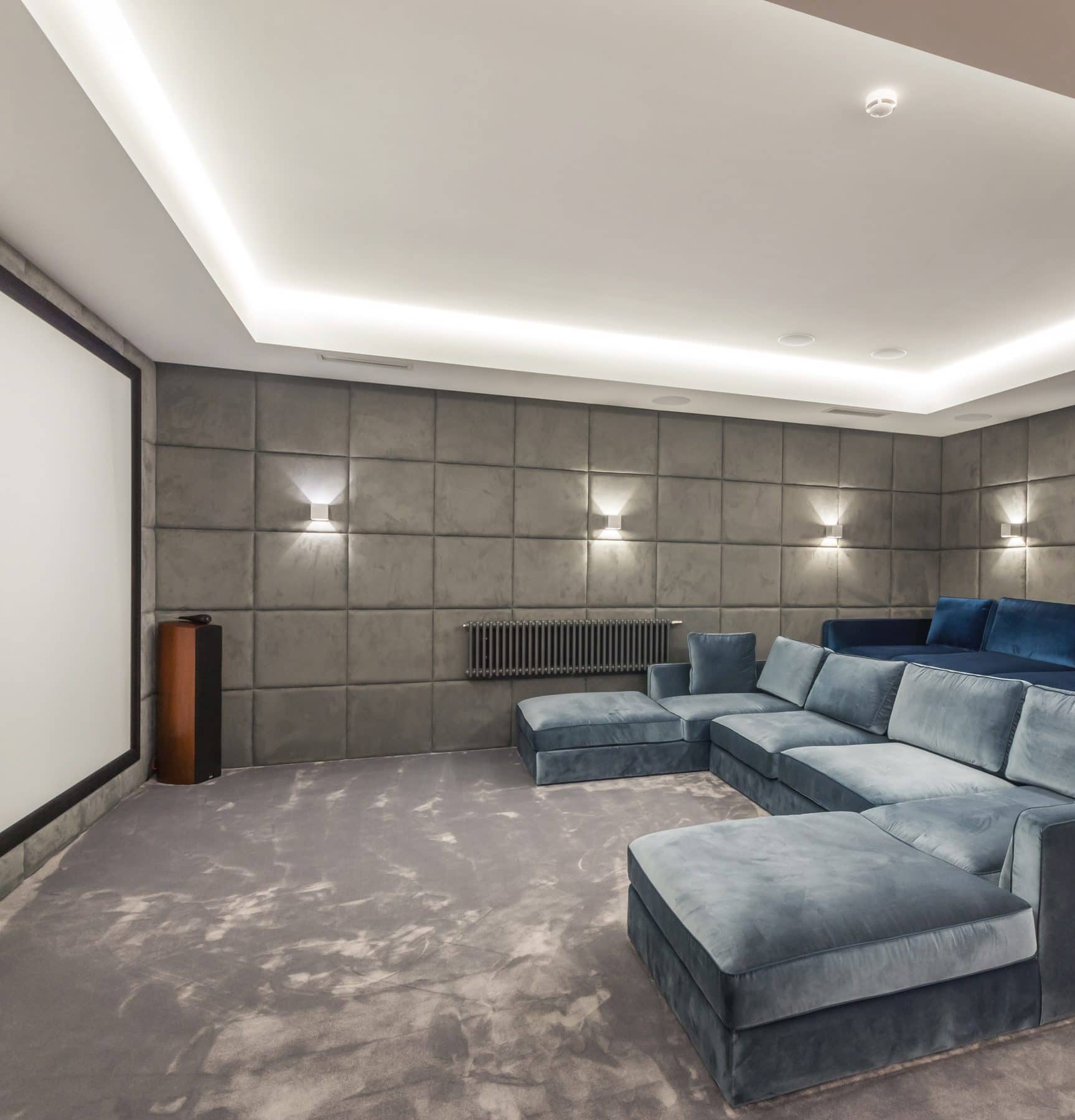
A dedicated home theater can look impressive and still sound disappointing if the room is untreated. Reflections, uneven bass response, and poor boundary control can make a system sound harsh, muddy, or unclear even when the speakers and electronics are high-end.
Good theater acoustics help the room disappear. Dialog becomes easier to understand, bass becomes tighter and more even, and the soundstage feels more focused and believable across the listening area.
Whether you are building a dedicated theater from the ground up or improving an existing media room, acoustic treatment is one of the highest-value upgrades you can make to the overall performance of the space.
Theater rooms sit close to the rest of the house, so most projects pair treatment with soundproofing so the rest of the home stays quiet. We measure with acoustic testing when the low end is the problem, and the same approach carries over to listening rooms and golf simulator bays.
The Room Decides
What You Hear
Core theater acoustic strategies
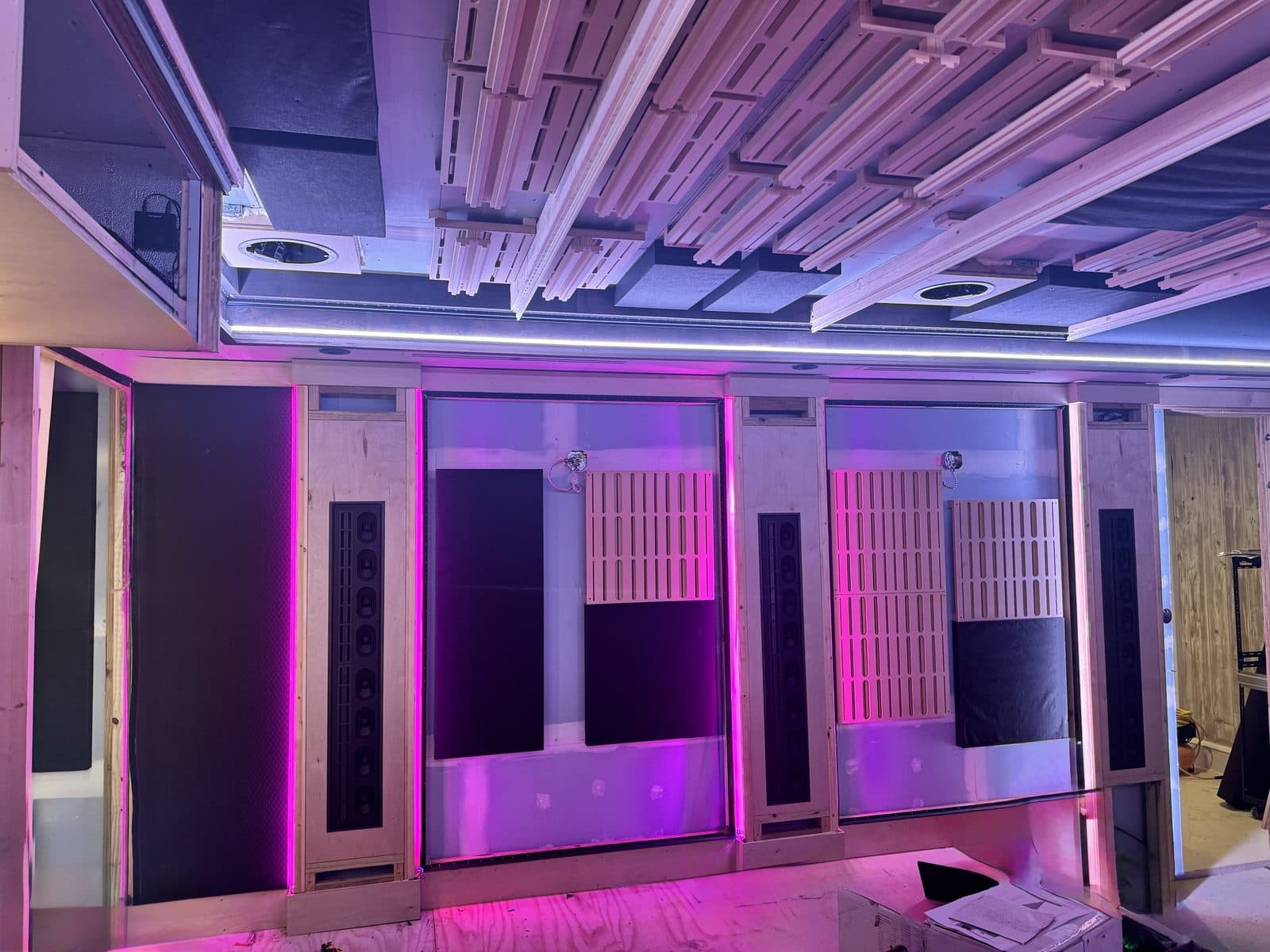
Strong theater rooms usually rely on a balance of reflection control, bass management, and carefully placed diffusion. The goal is not to make the room feel dead. The goal is to make it controlled, immersive, and believable.
Reflection Control
Early reflections from side walls, ceilings, and other hard surfaces can reduce clarity and imaging. Strategic absorption helps tighten what you hear from the front soundstage.
- Side wall acoustic panels
- Ceiling reflection control
- Front-end absorption zones
One of the biggest improvements for dialog clarity, imaging, and front-stage precision.
Bass Management
Low frequencies behave differently than mids and highs. Without proper control, bass can become uneven, boomy, or weak depending on seating position.
- Bass traps
- Corner treatment
- Targeted low-frequency control
Good bass treatment helps the system sound more even, powerful, and intentional rather than exaggerated or muddy.
Rear-Wall Balance & Diffusion
Rear-wall reflections can make a room feel confused or fatiguing. In some theaters, diffusion helps preserve energy while keeping reflections from becoming distracting.
- QRD diffusers
- Skyline diffusers
- Rear-wall acoustic balance
The right rear-wall approach depends on room size, seating layout, and the overall performance goals of the theater.
Common questions
Answers to common questions about home theater acoustic treatment, bass control, soundproofing, and what it takes to make a theater room really perform.
In many theaters, the problem is not the equipment. It is the room. Reflections, poor bass control, and untreated boundaries can reduce dialog clarity, imaging, and low-frequency balance even when the speakers are high quality.
Yes. Even premium speakers are heavily influenced by the acoustics of the room. Proper treatment helps the system perform more accurately by improving clarity, controlling reflections, and smoothing low-frequency response.
They solve two different problems. Acoustic treatment changes how the room sounds on the inside — clarity, reflections, and bass balance — using absorption, diffusion, and bass control. Soundproofing, or sound isolation, reduces how much sound passes between the theater and the rest of the house. Panels on a wall will not stop sound from traveling, and isolation construction will not by itself make a room sound good. Most theaters need both, planned together. Our soundproofing and sound isolation page covers the construction side in more detail.
Low frequencies carry far more energy than dialog, and their long wavelengths couple straight into the framing, so they travel through the structure itself rather than only through the air. That is why an upstairs bedroom still hears thumping long after voices have stopped being audible. Controlling it means decoupling surfaces from the structure, adding mass and damping, and isolating the subwoofer from the floor. Surface panels will not do it.
Partly, and it is worth being straight about the limits. Door upgrades and seals, duct treatment, sealing penetrations, and adding a damped layer of drywall over the existing surface can all be done without gutting the room, and together they make a real difference. True decoupling — isolation clips and channel, or a room within a room — needs the assembly open, so it is far cheaper to plan during construction than to retrofit. We will tell you which of those two situations you are in before you spend anything.
Still have questions about your theater room?
We value your online privacy.
Talk through your theater project
Tell us about the room, what you are hearing now, and what you want it to do better. A few details — and photos if you have them — are usually enough to get started.