
SOUNDPROOFING & ACOUSTIC ISOLATION – CHARLOTTE, NC
Reduce Noise Transfer Between Rooms Soundproofing, acoustic isolation, and structure-based noise control
Acoustics Specialty designs and installs soundproofing and acoustic isolation systems for theaters, studios, offices, podcast rooms, bedrooms, golf simulators, and specialty spaces where privacy and noise control matter.
Soundproofing is not surface treatment. Real isolation starts with the structure, the assemblies, and the weakest paths sound can travel through.
What soundproofing actually does
Soundproofing is about reducing sound transfer between rooms or from outside noise sources. It is used when privacy, isolation, or noise containment matter more than simply improving how a room sounds internally.
Unlike acoustic treatment, soundproofing depends on construction methods such as added mass, decoupling, damping, and air sealing. The goal is to limit how easily sound travels through walls, ceilings, floors, doors, and other structural paths.
Whether the problem is theater noise leaking into adjacent rooms, outside noise entering a studio, or speech privacy in an office, soundproofing solutions have to match the structure, the use of the space, and the type of noise being controlled.
Isolation
Starts Behind
the Finish
Core soundproofing methods
Effective soundproofing is usually built from multiple strategies working together rather than a single product. The right solution depends on what kind of noise is being controlled, how the room is constructed, and how much isolation the project actually requires.
Mass
Heavier wall and ceiling assemblies reduce how easily sound energy passes through them. This may include multiple layers of gypsum board or other dense construction materials.
- Additional gypsum layers
- Heavier wall and ceiling assemblies
- Improved airborne noise resistance
Useful when speech, TV sound, music, or general airborne noise needs to be reduced between spaces.
Decoupling
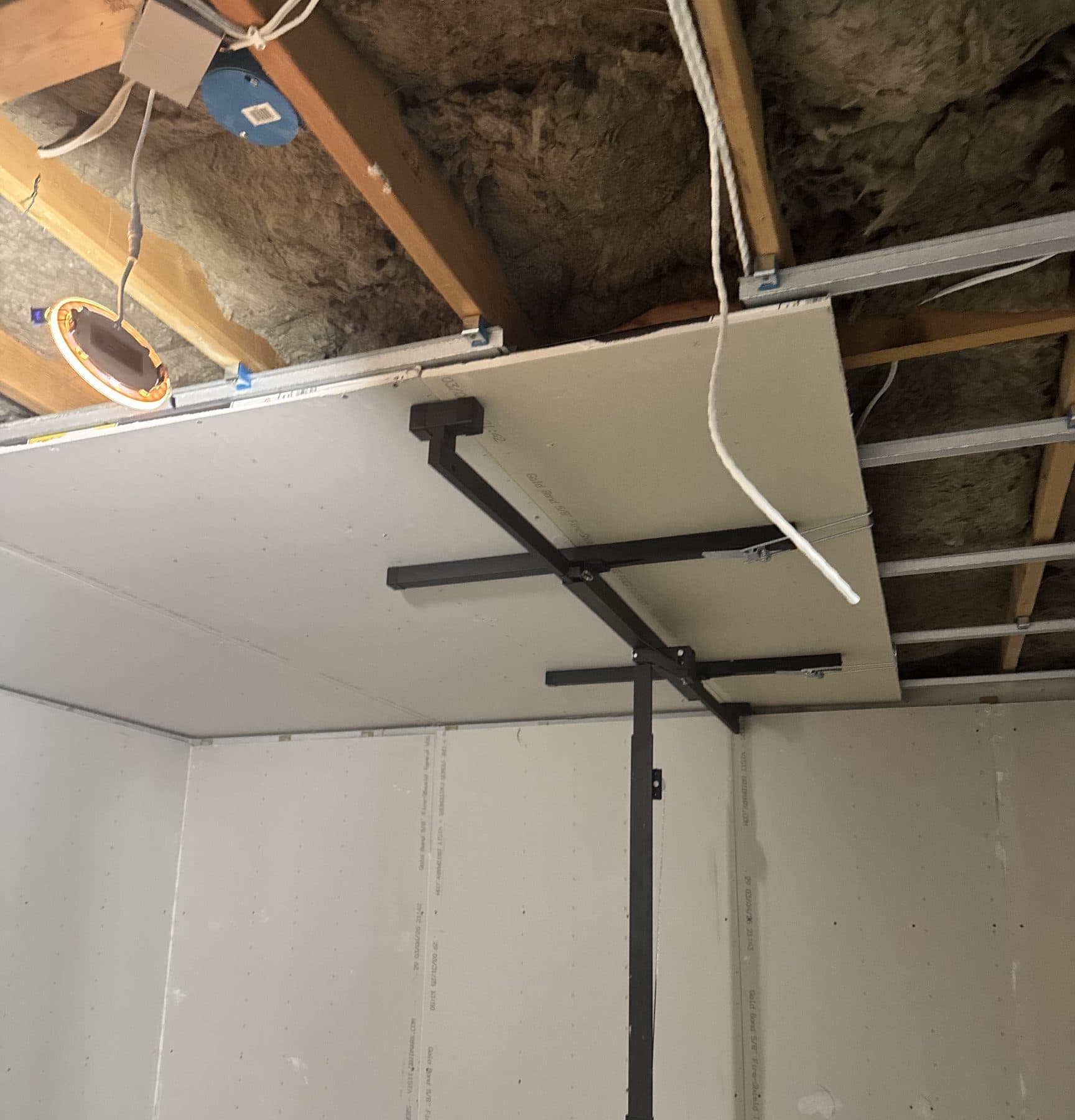
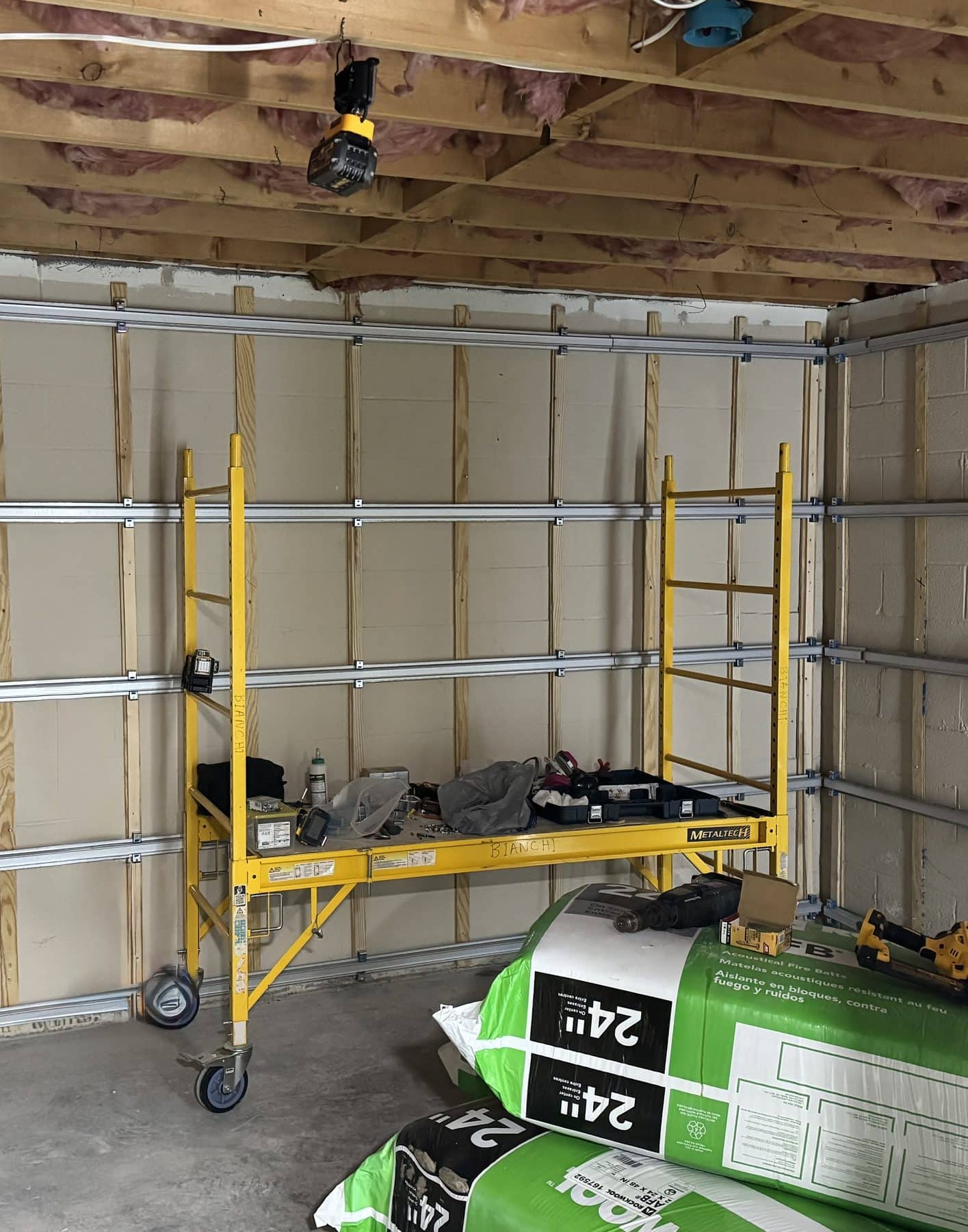
Decoupling separates surfaces structurally so vibration does not pass as easily from one side of an assembly to the other.
- Resilient channel
- Isolation clips
- Separated framing strategies
One of the most important tools for improving isolation in theaters, studios, and privacy-sensitive rooms.
Damping & Sealing
Damping reduces vibration inside assemblies, while sealing closes air gaps that let sound leak around otherwise solid construction.
- Damping compounds
- Acoustic sealants
- Perimeter sealing and penetration control
Even strong assemblies can underperform badly if gaps, penetrations, and transition points are left untreated.
Flanking paths
Sound does not only pass straight through a wall. It also travels around it, through shared framing, continuous floor decks, ductwork, and any opening that connects one space to another. These indirect routes are called flanking paths, and they are the most common reason a well-built assembly still underperforms.
- Doors and door seals
- HVAC ducts and shared returns
- Recessed lights and back-to-back electrical boxes
- Continuous floors, ceilings, and shared framing
A wall built to a high standard can be undone by a hollow-core door or a duct that runs straight through to the next room. We look at these before recommending anything structural, because they are usually the least expensive part of the job to improve.
Airborne noise and structure-borne noise are different problems
Most noise complaints fall into one of two categories, and they are not solved the same way.
Airborne noise is speech, television, or music through a speaker. It travels through the air and passes through assemblies, and mass, sealing, and decoupling all work well against it.
Structure-borne noise is different. Footsteps, a subwoofer, a ball strike in a simulator bay, or a mechanical unit sitting on a shared deck put energy directly into the building. That energy travels through framing and can surface in a room well away from the source. Adding mass to one wall rarely fixes it. The fix is usually to break the physical connection, isolate the source, or both.
Low frequencies are the hardest case either way. They carry more energy than speech, their wavelengths are long relative to typical assemblies, and they couple readily into structure. A room that handles speech privacy well can still let bass through, which is why theaters, studios, and simulator bays are scoped differently from an office.
Building it in versus retrofitting
Soundproofing costs far less when it is designed into the assembly than when it is added afterward.
During construction the whole toolkit is available: decoupled framing, isolation clips and channel, damped multi-layer assemblies, sealed penetrations, and duct routing planned to avoid direct paths between rooms. Nothing has to be taken apart to get there.
Once the room is finished, the practical options narrow. Door upgrades and seals, treating ducts and penetrations, and adding a damped layer over the existing surface can all be done without opening the structure, and together they make a real difference. Full decoupling generally cannot, because it needs access to the framing.
Neither situation is a dead end. What changes is the ceiling on how much isolation is realistically available and what it costs to reach it. We will tell you which of the two you are in before you commit to anything.
What we need to scope a soundproofing project
Useful scoping starts with a few specifics: what the room is, what sits on the other side of each wall, ceiling, and floor, and what noise is actually the problem, whether that is speech, music, low end, impact, or mechanical.
Construction matters as much as the room. Whether the walls are single or double framed, whether the floor is slab or joist, whether ducts are shared, and whether the ceiling is accessible all change what is possible.
When the source or the goal is unclear, we measure the room before specifying anything.
Common questions
Answers to common questions about soundproofing, acoustic isolation, and what to expect from a real noise control strategy.
Acoustic treatment improves the sound inside a room by controlling reflections and reverberation. Soundproofing reduces sound transfer between rooms or from outside noise sources using construction methods such as added mass, decoupling, damping, and sealing.
In most residential and commercial projects, the goal is significant noise reduction rather than absolute silence. The level of isolation depends on the structure, construction limitations, and the type of noise being controlled.
Soundproofing is commonly used in home theaters, recording studios, offices, conference rooms, podcast rooms, bedrooms, mechanical rooms, and other spaces where privacy or noise control is important.
Still have questions about soundproofing your room?
We value your online privacy.
Talk through your soundproofing project
Tell us what type of room you have, what noise you are trying to control, and what is happening now. A few details — and photos if you have them — are usually enough to get started.